English| USD
Suggested for you
More currencies
Choose a language
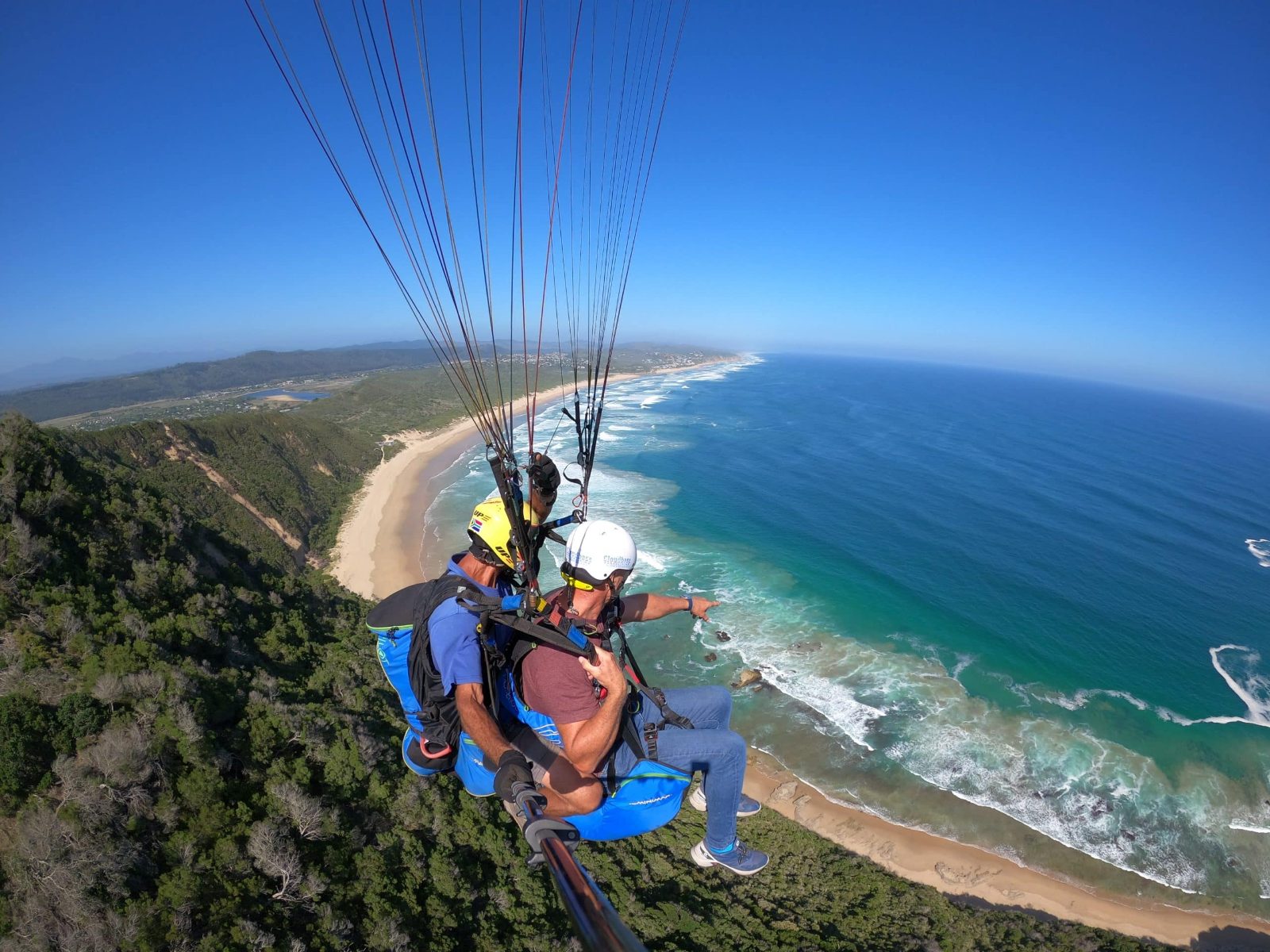
Cloud 9 Launch Site sits above one of the Garden Route's most dynamic coastal flight zones, where thermal activity and wind shear demand disciplined pre-flight protocols. This guide outlines the safety practices that keep Sedgefield's paragliding community airborne and incident-free, from equipment inspection routines to emergency descent procedures tailored to the site's specific meteorological patterns.
Quick answer
Paragliding safety tips for Sedgefield center on four protocols: verify wind speed remains below 25 km/h at launch, complete a full canopy inspection before every flight, maintain visual contact with at least one other pilot during thermal climbs, and carry a reserve parachute with current certification. The site's coastal thermals strengthen unpredictably between 13:00 and 15:00, requiring constant airspeed monitoring and a planned escape route to the beach landing zone 800 meters northwest of the launch point.
The Garden Route's prevailing southeasterly winds create lift conditions that can shift from benign to turbulent within ten minutes, a reality that makes pre-flight weather assessment non-negotiable at Cloud 9. Pilots checking conditions from the launch point should observe windsock behavior for at least five minutes, noting any sudden direction changes or velocity spikes that indicate unstable air mass interaction. A steady windsock at 15 degrees or less signals optimal launch windows, while erratic flapping or sock collapse warns of wind shear layers that compromise canopy inflation and early climb stability. Equipment failure accounts for a fraction of paragliding incidents compared to pilot decision-making errors, yet the consequences of a torn line or malfunctioning carabiner are severe enough to justify obsessive pre-flight checks. Every harness buckle, riser connection and brake line must be visually inspected and physically tested before walking to the launch point. Reserve parachute deployment handles should be within immediate reach and free of obstructions, with deployment bridles checked for tangles or wear that could delay canopy extraction during an emergency descent. Paragliding safety tips from experienced Sedgefield pilots emphasize the five-minute rule: if your equipment check takes less than five minutes, you missed something. Thermal awareness separates competent pilots from those who treat updrafts as predictable elevators. The mid-morning thermal cycle along Sedgefield's coastline produces narrow, strong cores that can lift a canopy 300 meters in under two minutes, but the same thermals generate sink zones on their perimeter that demand immediate speed-bar application to maintain altitude. Pilots new to the site should fly conservatively during their first three sessions, staying within gliding distance of the beach landing area until they can read the visual cues of thermal location: cumulus cloud formation, birds circling in tight spirals, and the distinctive ripple pattern on vegetation below active lift columns. Communication protocols reduce the risk of mid-air collision during crowded flight days when eight or more canopies share the same thermal column. Radio contact on the designated 145.500 MHz frequency allows pilots to announce their position during ridge runs and coordinate landing approaches when multiple aircraft converge on the beach zone simultaneously. A working radio is not legally required but functions as essential safety equipment when visibility drops or a pilot needs to alert ground crew to an off-site landing in the nature reserve terrain east of the launch point.
“A steady windsock at 15 degrees or less signals optimal launch windows, while erratic flapping warns of wind shear layers that compromise canopy stability.”
The optimal arrival window for paragliding at Cloud 9 is 10:00–16:00. During these hours, thermal conditions typically develop to provide the necessary lift for safe and sustained flights.
Warm 20-26°C; reliable sea breezes
Frequent thermal activity supports regular afternoon flying sessions.
Cool 12-18°C; stronger winds possible
Clear skies often provide stable conditions for morning pilots.
Mild 16-22°C; transitional wind patterns
Moderate temperatures offer consistent conditions for mid-day launches.
—
Thermal development peaks within this timeframe, making it the safest period for take-off.
Verdict: For the most consistent thermal activity, target the 10:00–16:00 arrival window during the milder months of March to May or September to November.
Prepare thoroughly to ensure safe flight conditions and compliance with Cloud 9 protocols.
The Cloud 9 launch site is located in Sedgefield along the Garden Route. The most reliable way to access the site is by private vehicle, following local road signage toward the designated launch area.
N2 national road to Sedgefield, follow signs for Cloud 9
Local shuttle or taxi service to Cloud 9, Sedgefield
Ensure your vehicle is capable of handling gravel access roads. Check current site conditions via the official site at https://www.sedgeview.co.za before departing to confirm access.
Access to the Cloud 9 Launch Site in Sedgefield is provided at no cost. However, all pilots must ensure they possess the necessary credentials for site usage.
Verdict: A typical paraglider pays 0 ZAR for site access, provided they maintain the required pilot permits.
The Cloud 9 launch site in Sedgefield operates on a continuous schedule to accommodate paragliding activities throughout the week.
Everything you need to know about paragliding safety tips
Adhering to paragliding safety tips involves checking your harness, helmet, and reserve parachute before every launch. Maintaining constant awareness of local wind cycles at the Garden Route is critical for a secure descent.
While the site is open to the public, valid pilot permits are required for all registered paragliders using the facility. Verification of these credentials ensures that all flyers maintain standard aviation safety protocols.
The best arrival window is 10:00–16:00, when optimal thermal conditions typically develop. Avoiding flights outside these hours helps pilots manage unpredictable wind shifts and ensures better visibility for safe paragliding.
One of the most important paragliding safety tips is to scout the landing field for obstacles such as power lines or fences before taking off. Familiarizing yourself with the designated landing zone geography prevents mid-air navigation errors.
Beginners should always fly with qualified instructors who emphasize paragliding safety tips during every training session. These professionals guide new pilots through launch techniques and help them identify safe air currents.
The Cloud 9 site offers free access to the public, meaning there is an entrance fee of 0 ZAR. However, users must ensure they meet all regulatory requirements for flight activities at this location.
Weather-related flight guidance is part of the core paragliding safety tips that all pilots must respect. Always monitor cloud development and coastal wind speeds to prevent getting caught in unsuitable aerial conditions.