English| USD
Suggested for you
More currencies
Choose a language
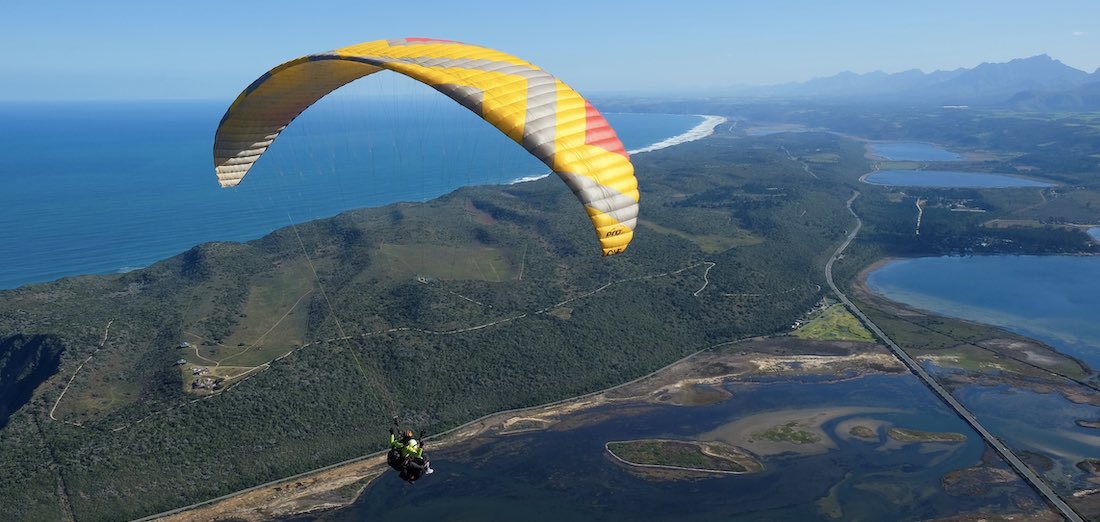
Flying a paraglider in Sedgefield requires adherence to national aviation law and site-specific protocols. The framework is straightforward but non-negotiable: SAHPA membership, pilot rating verification, and compliance with controlled airspace boundaries shape every flight from Cloud 9.
Quick answer
Paragliding rules in Sedgefield mandate a valid SAHPA (South African Hang Gliding and Paragliding Association) permit for all pilots accessing Cloud 9. The site operates under South African Civil Aviation Authority airspace regulations, with no public entrance fee but zero tolerance for unlicensed flight. Pilots must carry proof of current rating, third-party liability insurance, and familiarity with local launch and landing zone protocols before any launch window.
Cloud 9 sits within controlled airspace monitored by the South African Civil Aviation Authority, which means every paraglider launch is subject to federal aviation oversight. SAHPA membership is the single non-negotiable credential: the association issues pilot ratings, maintains the national accident registry, and liaises with SACAA on behalf of the sport. Without a valid permit, access to the launch site is prohibited outright. The paragliding rules guide published by SAHPA establishes a tiered rating system—P1 through P4—that corresponds to permitted flight zones, weather conditions, and distance from launch. Cloud 9 is classified as a P2 site under normal wind conditions, but thermal activity during midday hours can elevate the classification to P3. Pilots are expected to self-assess against the published matrix before committing to launch. The site does not employ on-site marshals; regulatory compliance is individual responsibility. Airspace boundaries are the second layer of enforcement. The Garden Route corridor includes restricted zones near George Airport, and altitude ceilings shift depending on time of day and air traffic patterns. SAHPA publishes a digital airspace map updated quarterly, and cross-referencing GPS coordinates before flight is standard procedure. Violations trigger SACAA investigation and can result in permit suspension. Third-party liability insurance is compulsory under SAHPA bylaws, with minimum coverage of two million rand. Proof of insurance must be available for inspection at launch. The requirement exists because paragliding incidents—though rare—carry property damage and injury exposure that extends beyond the pilot. Many international pilots discover this clause only upon arrival; SAHPA does not recognize foreign federation insurance automatically. Launch and landing zones at Cloud 9 are demarcated but not staffed. Right-of-way protocols follow the standard hierarchy: aircraft on final approach have absolute priority, and pilots already airborne yield to those still preparing on the hillside. Wind direction determines the active launch face, and attempting a reverse launch outside designated wind parameters constitutes a breach of site protocol. The consequence is informal but effective: repeat offenders are reported to SAHPA site coordinators and face peer-imposed flight restrictions.
“SAHPA membership is the single non-negotiable credential for launch access—without it, Cloud 9 remains legally off-limits.”
Access to the Cloud 9 paragliding site in Sedgefield does not require a public entrance fee. Pilots must hold a valid SAHPA permit to fly at this location.
Verdict: A typical pilot pays 0 ZAR for site access, though possession of a valid SAHPA permit is a mandatory requirement for flying.
The Cloud 9 paragliding site in Sedgefield is open for operations daily. Pilots may access the site throughout the week to accommodate varying weather conditions.
The best arrival window is 08:00–18:00, as optimal thermal and wind conditions typically occur during these daylight hours. Planning flights within this period ensures pilots align with the most favorable atmospheric stability for the Cloud 9 site.
Warm, stable thermals (20°C–28°C)
Consistent sea breezes support longer flight durations during these months.
Mild, predictable wind (15°C–22°C)
Clear skies and light winds provide stable conditions for standard flights.
Cooler, crisp air (10°C–18°C)
Wind directions can be variable; check local forecasts before site arrival.
Varying conditions (14°C–23°C)
Thermal activity builds as temperatures rise throughout the season.
Verdict: The optimal window for flying is between 08:00 and 18:00 during the months of March, April, October, or November.
The Cloud 9 launch site is located in Sedgefield, 6573, South Africa. The most practical approach for reaching the site is by private vehicle via the N2 highway.
N2 highway to Sedgefield, exit toward Cloud 9
Local Sedgefield taxi services to Cloud 9
Plan your travel to reach the site within the 08:00–18:00 arrival window to align with optimal thermal and wind conditions. Ensure your vehicle is parked in designated areas to keep access routes clear.
Everything you need to know about paragliding rules
Pilots must adhere to established paragliding rules to ensure safety and preserve access to the Cloud 9 launch site. Familiarity with local aviation protocols and site-specific guidance is required for all visitors.
Yes, site access requires a valid SAHPA permit for pilots. Possession of this certification is mandatory for any individual intending to launch from the designated areas.
Strict compliance with local flying regulations is expected, as these Sedgefield flight standards protect the airspace and community. Pilots are encouraged to review the current site manual before arrival.
There is 0 ZAR entrance fee for accessing the area. While site access is free, you must maintain your valid pilot credentials at all times.
The best arrival window is 08:00–18:00, when thermal and wind conditions are typically most favorable. Planning your flight within these daylight hours maximizes your opportunity for safe and enjoyable airtime.
All pilots must hold the necessary SAHPA ratings appropriate for the flight conditions and site complexity. Safety procedures are non-negotiable for both student and qualified pilots.
A common mistake is failing to check the latest weather report or neglecting to verify current site status. Always consult official resources before heading to the launch zone.